
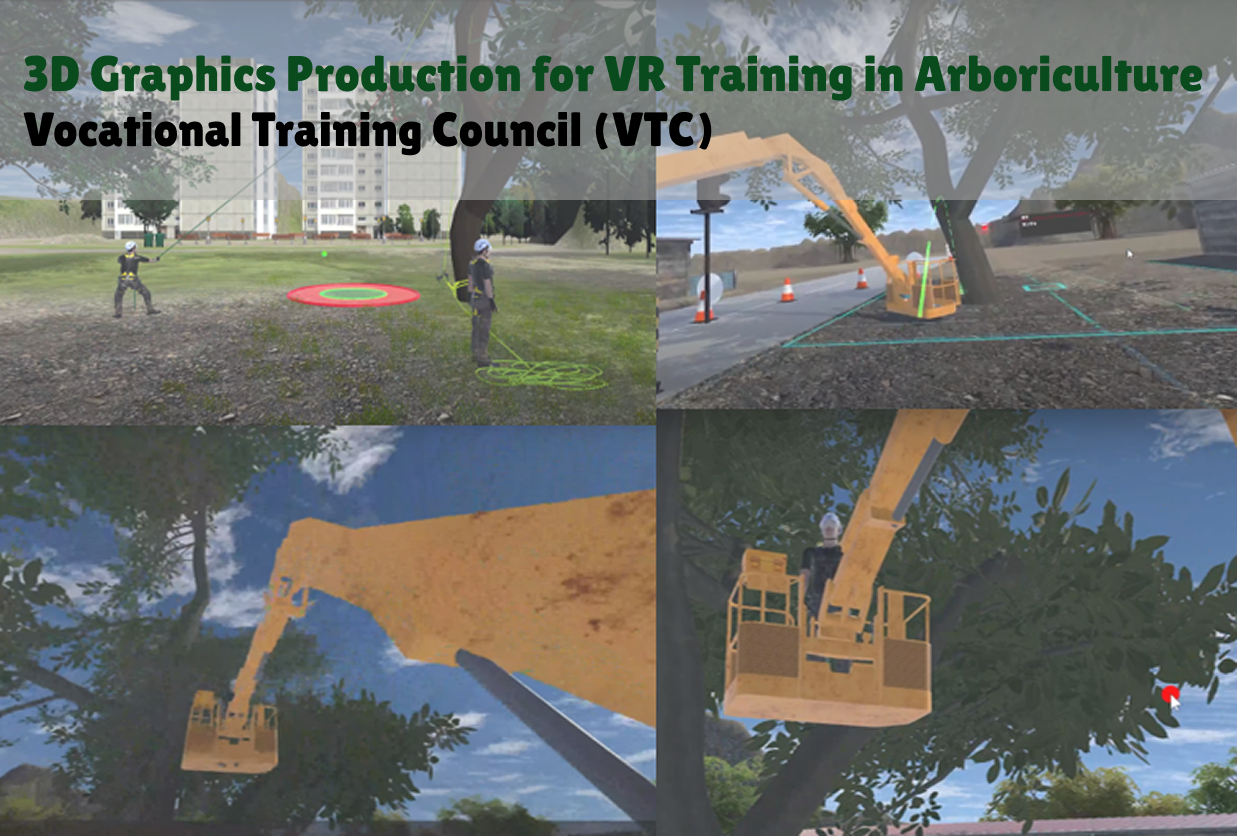
3D Graphics Design & Production
Graphics for Arboriculture VR Training – IVE (Shatin), VTC
1) Graphics Design & Production Overview
For the Arboriculture VR Training experience, the 3D graphics package was designed to be highly readable, training-focused, and physically believable while still optimizing for real-time performance in VR. The goal was to create an environment where trainees can learn safe, repeatable procedures through clear visual cues: tree structure, climbing/rigging points, equipment scale, and scenario-specific hazards.
Work included:
- Environment modeling (ground plane, access zones, training layout space)
- Tree asset design with multiple variations in structure and scale
- Rigging-friendly geometry for tall trees and EWP (Elevated Work Platform) training
- Material creation (bark, leaf clusters, ground textures) optimized for VR
- Lighting and scene readability (training silhouettes, contrast, and depth clarity)
- Scenario placement for consistent training beats and camera visibility
2) Graphics for Environment (VR Training World)
The environment was built to support training outcomes rather than photoreal tourism visuals. The scene prioritizes:
- Clear traversal paths and safe zones
- Consistent scale references (so trainees can judge reach and equipment height)
- Stable visual anchor points (tree trunk centerlines, major branches, rig attachment zones)
- Performance-friendly detail, using controlled geometry density and efficient material shaders
3) Graphics for Specific Scenarios
A key deliverable was scenario-based tree graphics, designed to represent realistic arboriculture conditions and to match training equipment workflows.
Scenario Coverage Includes:
- At least 20 trees representing multiple growth styles and training needs
- Different branch counts (varying crown density and branching complexity)
- Different tree heights (short training trees + tall rigging/EWP trees)
- Tall trees specifically for:
- Rigging training (higher anchor points and vertical line management cues)
- EWP training (platform height, reach envelopes, safe operating positioning)
4) Tree Asset Requirements (Minimum Spec Met)
The tree set includes 20+ unique assets or variations, ensuring the VR training does not feel repetitive and can train decision-making across different structures.
Each tree variation includes:
- Unique height range (at least multiple height tiers)
- Branch and limb complexity changes, including:
- fewer thicker limbs for simpler rigging cases
- denser crown systems for advanced scenarios
- Training-friendly trunk and crown proportions, so equipment and hand placements behave consistently
- Rigging point suitability for tall-tree workflows
5) Tall Trees for Rigging & EWP Training (Special Focus)
Tall-tree assets were created with additional emphasis on realism and training usability, including:
- Higher branch tiers for rig attachment and redirect lines
- Clear rigging silhouettes (so trainees can track direction and placement)
- EWP operation cues, such as:
- platform-to-branch reach clarity
- equipment scale consistency
- readable “target zones” for safe training execution